
Chasen Holder: The Kuse Naoshi Your Matcha Whisk Needs
If you have ever watched a new chasen slowly close up like a tulip at night, this page explains why it happens and what the Japanese tea tradition uses to prevent it. Written by Naomi Carter, Sourcing & Testing Lead at KujiMatcha — you can read how she tests every piece on our how we test page.
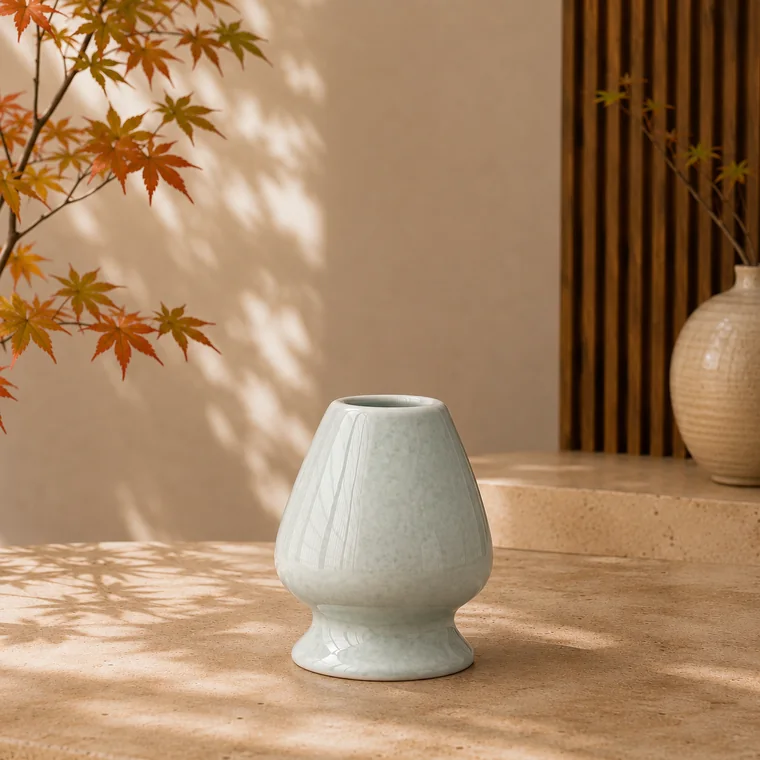
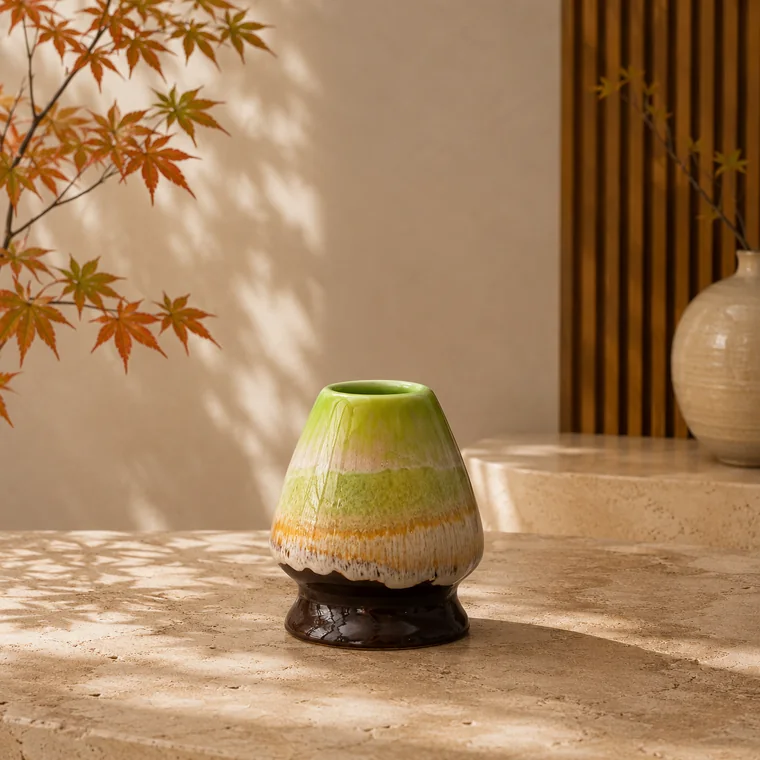 Get yours
 Ceramic Chasen Holder (Kuse Naoshi)
700+ verified orders, 4.8/5 · 10 glazes
You'll pick your color at the secure checkout step.
Free shipping · 30-day money-back guarantee · Secure checkout
"Cute color, and works great it's also a great price. Looks just like the picture. Shipping was also very quick! I recommend if you're looking for a good whisk holder (chasen yasume)."
— Bella S., verified buyer (US) · buyer photo. More on our reviews page.
What is a chasen? (茶筅)
The chasen is one of the quiet masterpieces of Japanese craft. Most of the world's traditional production comes from one place: Takayama, in Nara prefecture, where workshops have been hand-carving whisks for roughly 500 years, since the Muromachi period. According to the KOGEI JAPAN traditional crafts directory, Takayama accounts for over 90% of Japan's chasen production, and Takayama chasen are officially designated as a traditional craft of Japan. A single whisk starts as a section of bamboo and ends as a ring of tines thin enough to flex like brush bristles — split, shaved, and curled entirely by hand.
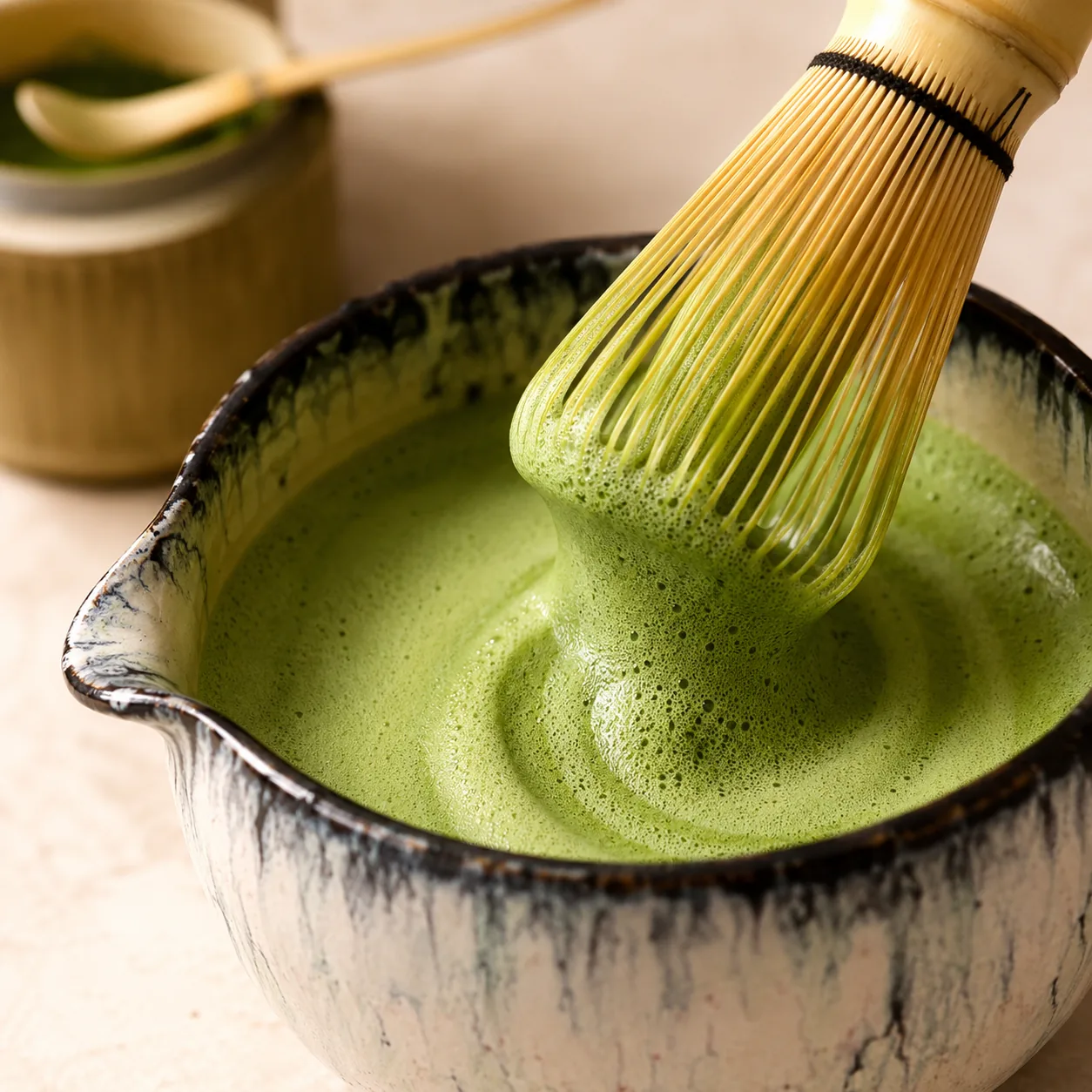
Those tines are the whole point. Their fine tips are what break up matcha particles and fold air into the tea; a whisk with splayed, open tines froths well, and a whisk with curled, collapsed tines drags through the bowl and leaves the surface flat. Technique matters too — our guide on how to use a matcha whisk covers the wrist motion — but no technique rescues a whisk that has lost its shape.

Why chasen tines lose their shape
Every session follows the same cycle. Hot water relaxes the bamboo; whisking flexes the tines hundreds of times; then the wet whisk sits somewhere for hours while it dries. That drying position is the mold the tines set into. Left standing on its handle, water also drains down into the tight center of the head, where it lingers — and a whisk that stays damp in the core is a whisk that invites mildew. This is why the traditional advice has always been the same: rest the whisk head-down, over a form that holds the tines open, with air moving through it. A holder does three jobs at once: it keeps the tines spread in their bloom shape, it lets the head dry fully to protect against mold, and by doing both it stretches the whisk's usable life. Storage habits matter as much as cleaning habits here; we cover both in how to clean a matcha whisk and how to store a matcha whisk.
Kuse naoshi (くせ直し): the whisk holder's real name
The detail we love: in a formal tea setting, the kuse naoshi is a backstage tool. It lives in the mizuya, the preparation room behind the tea room, where the host cleans and readies the utensils — guests never see it during the ceremony itself. It is maintenance equipment, not display ware, which says a lot about how seriously the tradition takes whisk care. In English, the same object goes by several names, all interchangeable:
| Term | Japanese | What it refers to |
|---|---|---|
| Chasen | 茶筅 | The bamboo matcha whisk itself |
| Kuse naoshi | くせ直し | The whisk shaper/holder — literally "habit corrector" |
| Chasen holder / chasen stand / whisk keeper | — | Common English names for the kuse naoshi |
Using one takes zero ceremony: rinse the whisk in warm water after your bowl, shake off the excess, and set it head-down over the dome. That is the entire routine. The holder does the rest overnight.
How to choose a chasen holder
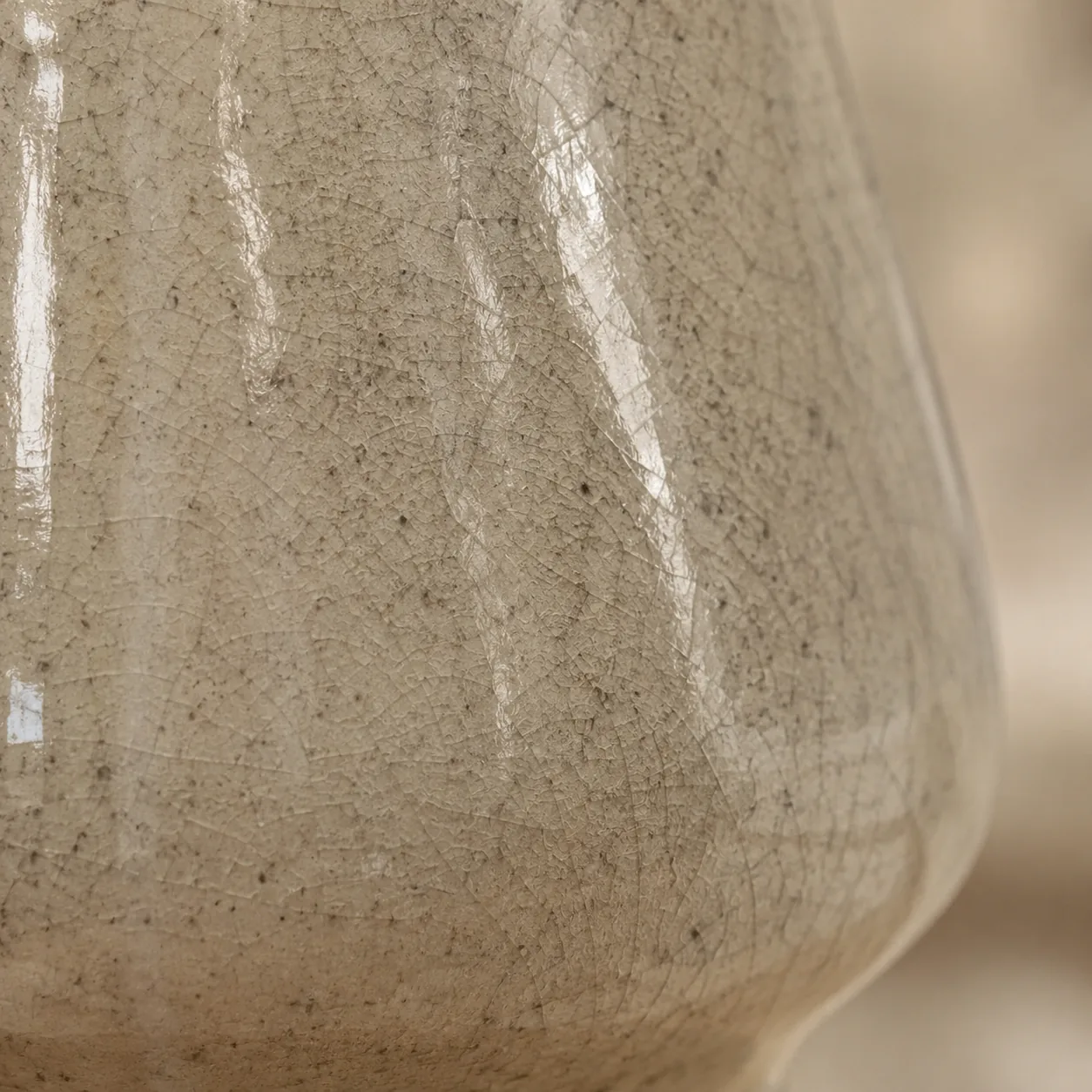
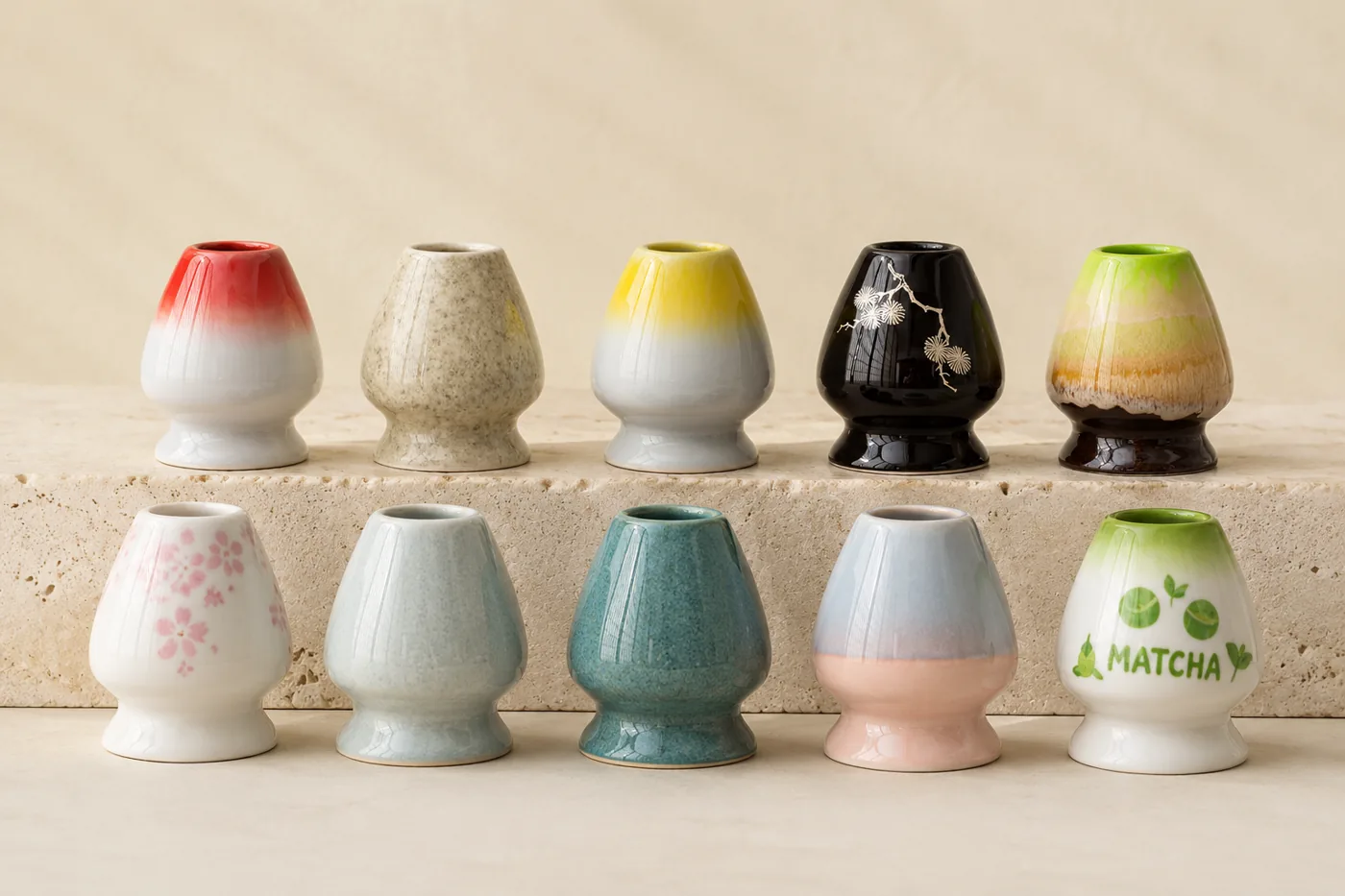
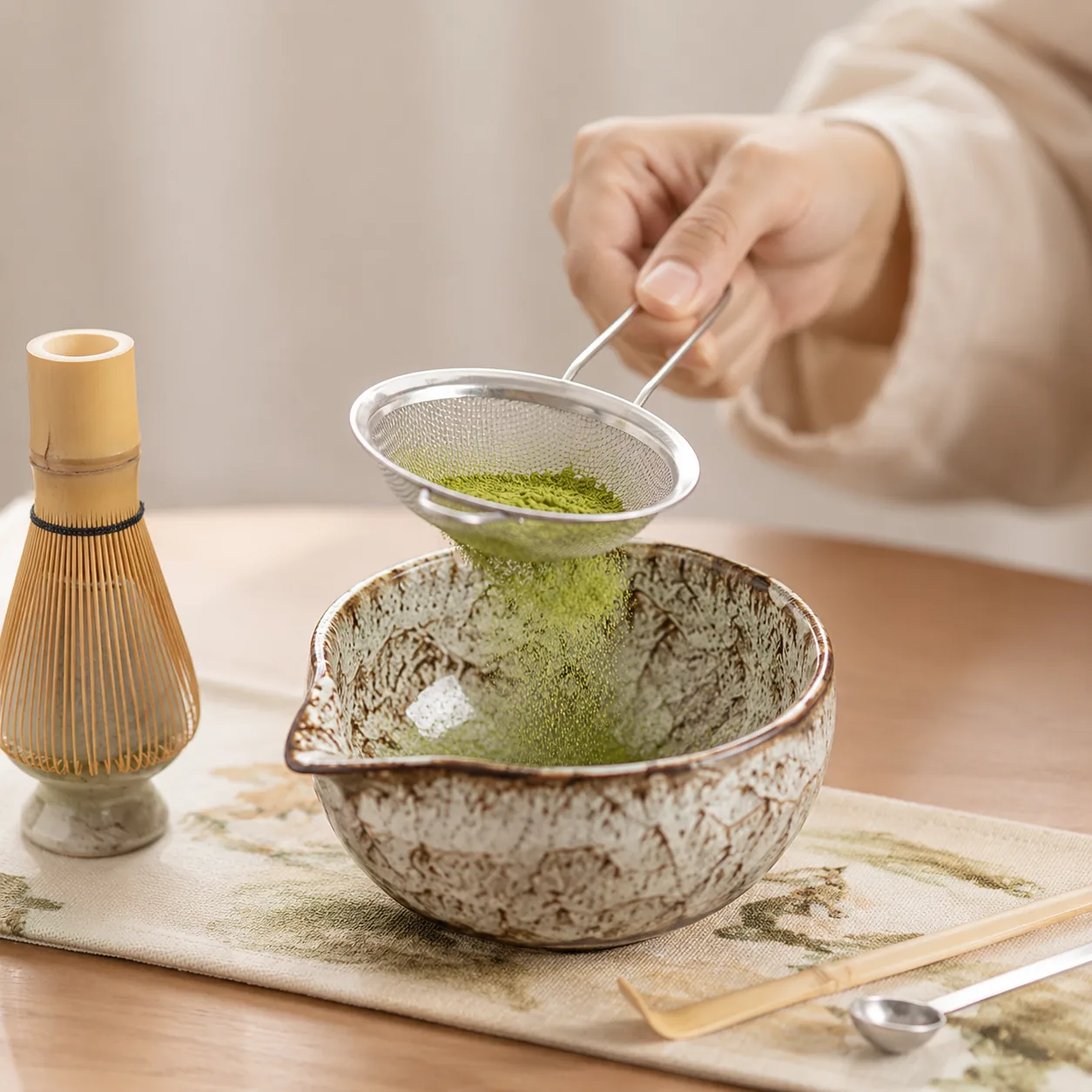
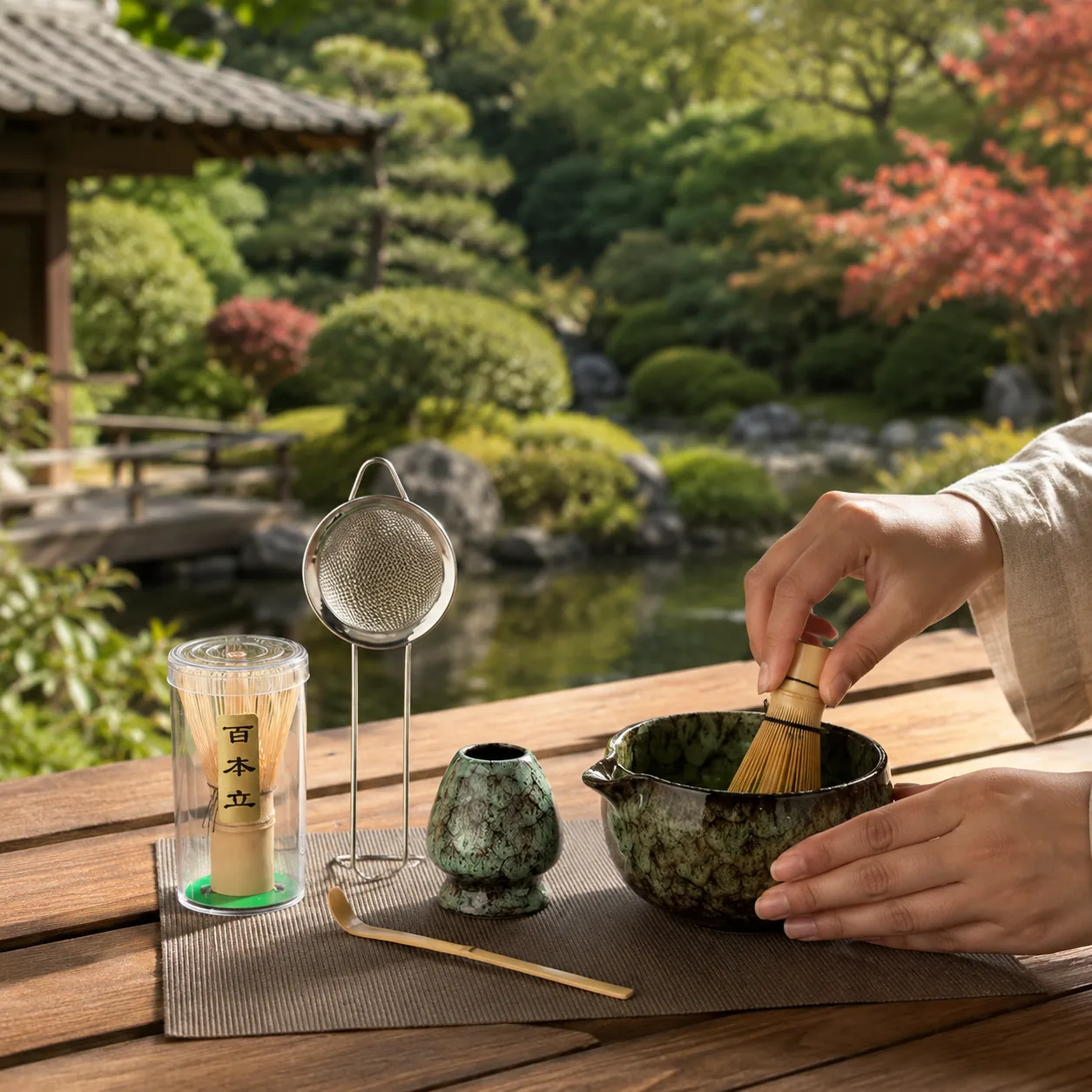
Traditional kuse naoshi come in wood or ceramic. For a kitchen counter, we sell ceramic only: wood can hold moisture in a way glazed ceramic simply cannot, and a whisk holder's whole job is drying. The full material comparison, plastic included, is in our guide on ceramic, bamboo, or plastic whisk holders. Ours is a classic kuse naoshi profile — a rounded cone with an opening at the top — glazed, 7 cm tall with a 6 cm footprint, small enough to live next to the kettle. It comes in 10 glazes, from soft sunset red to deep jade teal; the full color gallery is on our ceramic matcha whisk holder homepage. If you are starting from zero rather than upgrading, the same holder design is included in our 6-piece matcha whisk set alongside a spouted bowl, chasen, sieve, and bamboo scoops — the set's chashaku scoop gets its own guide too. And if the holder is a present for the matcha person in your life, our matcha gift set guide helps you pick between the single piece and the full set.
Two whisks, two weeks: what the holder actually changes
We ran a simple side-by-side in our own kitchen: two identical new chasen, used on alternating days for 14 days. One dried head-down on a ceramic holder after every rinse; the other dried standing in a cup, tines up, the way most beginners store theirs. We photographed both heads each morning. By the end of week one, the cup-dried whisk's outer tines had visibly begun curling inward; by day 14 its bloom had narrowed while the holder-dried whisk still matched its day-one photos. Same bamboo, same tea, same rinses, and the only variable was where each whisk spent the night. We document the protocol step by step on our how we test page.
The chasen holder, in verifiable numbers
verified orders of this ceramic holder, rated 4.8/5 by verified buyers
— verified buyer order records, 2026
of Japan's chasen are produced in Takayama, Nara — a craft tradition of roughly 500 years
— KOGEI JAPAN traditional crafts directory, 2026
US matcha tea market revenue in 2024, growing at a projected 8.5% per year through 2033
— Grand View Research, 2025
Chasen holder questions, answered
What does kuse naoshi mean?
Kuse naoshi (くせ直し) is the Japanese name for the whisk shaper — the small stand a chasen rests on to dry. Kuse means a habit or bend, naoshi means correcting, so the name describes exactly what it does: it corrects the bent tines of a wet bamboo whisk as they dry.
Is a chasen holder the same thing as a chasen stand?
Yes. Chasen holder, chasen stand, whisk keeper, and kuse naoshi all refer to the same object: a dome-shaped rest, usually ceramic or wood, that a bamboo matcha whisk sits on head-down between uses. Our version is glazed ceramic, 7 cm tall with a 6 cm footprint, in 10 glazes.
Do I really need a chasen holder if I only make matcha sometimes?
The less often you whisk, the longer your chasen sits drying in one position — which is when tines set into a curl. A holder is most valuable for occasional drinkers precisely because of those long rests. Daily drinkers notice the difference in foam; occasional drinkers notice their whisk simply lasts.
How do I clean a ceramic chasen holder?
Glazed ceramic does not absorb tea or moisture, so a rinse and a wipe with a damp cloth is all it needs. Let it dry before the next whisk rest. The whisk itself has its own routine — rinse without soap, shake, rest head-down — covered in our whisk cleaning guide.
Written by Naomi Carter, Sourcing & Testing Lead at KujiMatcha — her sourcing story is on our about page.