
· Naomi Carter
Chashaku Guide: The Matcha Scoop, Explained
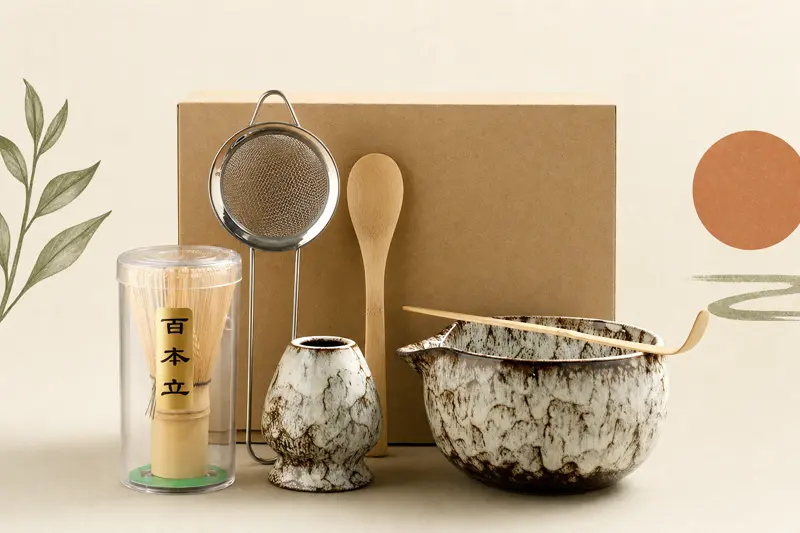
Of the tools in a traditional matcha setup, the chashaku is the easiest to underestimate. It looks like a bent coffee stirrer. It is actually a measuring instrument, a piece of craft history, and the quiet fix for the single most common beginner mistake: using way too much matcha. This guide covers what the chashaku is, where it came from, how to dose with it, and how to keep a bamboo scoop in shape for years.
What a chashaku is (and what it replaces)
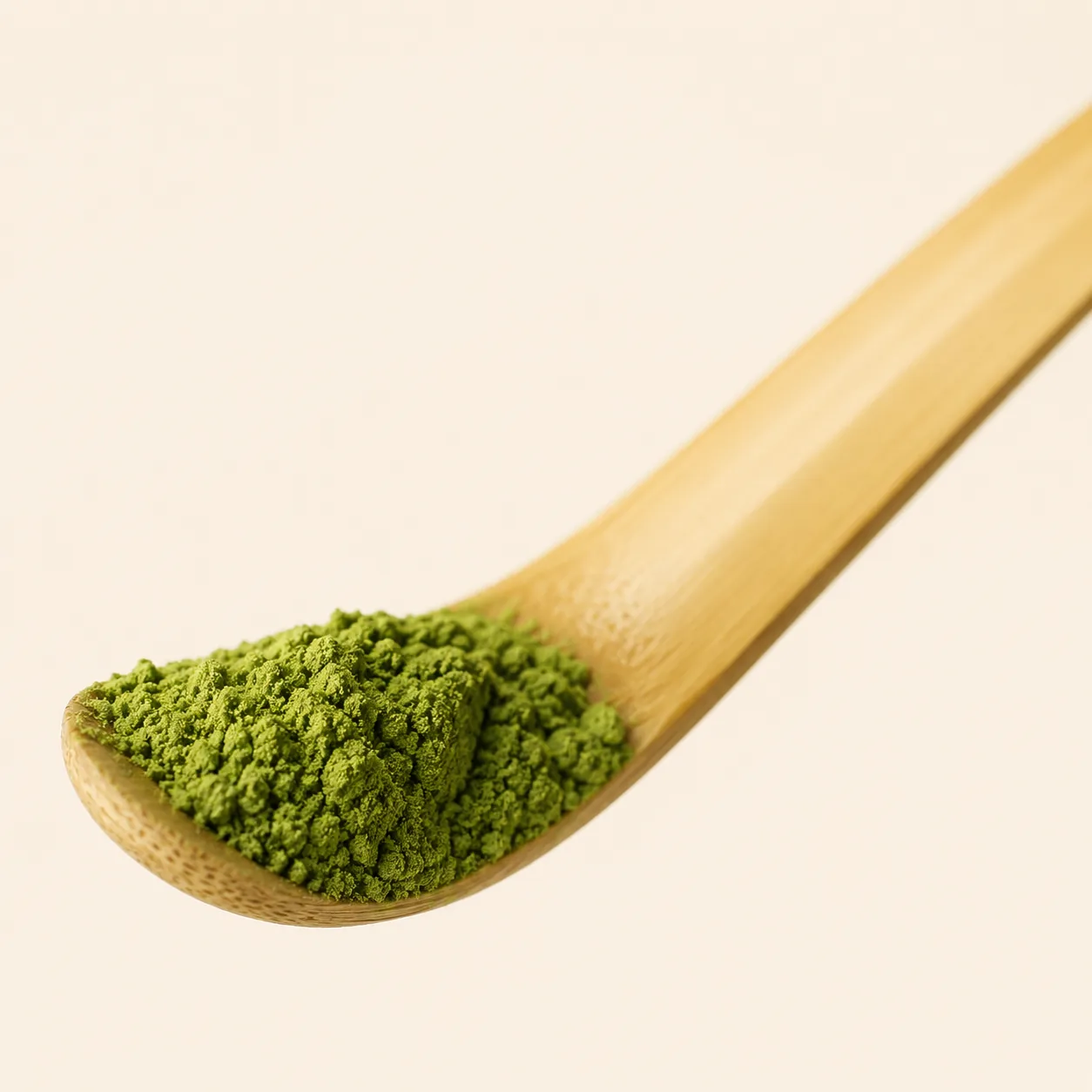
The chashaku is a narrow strip of bamboo, curved at one end into a shallow scoop. The one in our 6-piece matcha set is 17.78 cm long, which is typical: long enough to reach the bottom of a tea tin, narrow enough to deliver a small, repeatable amount of powder. That small amount is the point. Matcha is dosed in single grams, and Western kitchen spoons are built for a different scale entirely. A heaping teaspoon of matcha can easily double or triple a traditional dose, which is how so many first bowls end up thick, bitter, and discouraging.
Bamboo also happens to be the right material for the job. It is smooth enough that fine powder slides off cleanly instead of packing into corners, it adds no metallic contact to a tea culture that prizes subtle flavor, and it is quiet against a ceramic tin. None of that is mystical; it is just a tool that has been optimized for one task for a very long time.
A scoop with five centuries of history
The chashaku predates every piece of modern tea gear on your counter. Bamboo tea scoops became central to Japanese tea practice in the 15th and 16th centuries, and the most famous examples are linked to Sen no Rikyu, the 16th-century master who shaped the tea ceremony into the spare, deliberate form still practiced today. The Metropolitan Museum of Art holds tea scoops attributed to Rikyu, carved from a single narrow piece of bamboo in the Momoyama period; he was known to cut bamboo for utensils himself. Tea masters carved scoops as personal expressions, named them, and passed them down the way other cultures pass down pens or watches.
You do not need to bring ceremony-grade reverence to a Tuesday morning bowl. But it is worth knowing that when you level off a scoop of matcha with a curved sliver of bamboo, you are using a tool whose design has barely needed to change since the 1500s. Very few objects in your kitchen can say that.
How to dose matcha with a chashaku
The working rule quoted across tea guides: one chashaku scoop carries roughly one gram of matcha. From there, the two classic preparations are simple multiplication:
| Preparation | Chashaku scoops | Water | Character |
|---|---|---|---|
| Usucha (thin tea, the everyday bowl) | 2 scoops (~2 g) | ~70 ml | Light, foamy, brisk |
| Koicha (thick tea, ceremony style) | 3–4 heaping scoops (~4 g) | ~40 ml | Dense, paint-like, intense |
| Matcha latte base | 2–3 scoops | Small splash to whisk, then milk | Adjust to taste against the milk |
Scoop from the tin without packing the powder down, level it gently against the inside of the tin, and drop it straight into your bowl (through the sieve, ideally). Two scoops, sift, add warm water, and you are ready for the W-motion whisking technique. If your matcha still tastes harsh at that dose, the culprit is almost always water temperature rather than quantity.
Our consistency check. While testing the set, we dosed ten bowls by eye with a regular kitchen teaspoon and ten with the set's chashaku, then compared the results in the cup. The teaspoon bowls swung noticeably from thin to bitter batch to batch; the chashaku bowls stayed consistent enough that we stopped thinking about dosing at all. That consistency, more than any tradition, is the practical argument for the tool: it removes a variable, and matcha has few enough variables that removing one changes your mornings.
Chashaku care: the two-second routine
A chashaku only ever touches dry powder, so it needs almost no maintenance, and overwashing is the main way people damage one. After use, wipe it with a dry or barely damp cloth and put it away dry. Skip soap entirely, for the same reason you skip it on your whisk: bamboo is porous and holds onto detergent. Skip long soaks, which can swell the bamboo and relax the curve that makes the scoop work. And keep it away from radiators and sunny windowsills, since heat is what turns flexible bamboo brittle. The full bamboo-care logic is laid out in our whisk cleaning guide and the matching storage guide; the chashaku is simply the low-maintenance member of the same family.
The numbers
matcha per traditional chashaku scoop, with 2 scoops per ~70 ml bowl as the standard thin-tea ratio
— traditional thin-tea dosing standard, accessed 2026
the Momoyama period, era of bamboo tea scoops attributed to Sen no Rikyu held in the Met's collection
— The Metropolitan Museum of Art, accessed 2026
length of the bamboo chashaku included in our 6-piece set, sized to reach the bottom of a standard tea tin
— KujiMatcha product spec sheet, 2026
orders for that 6-piece set, rated 4.9/5 across verified buyer reviews
— KujiMatcha order data, 2026
Where the chashaku fits in your kit

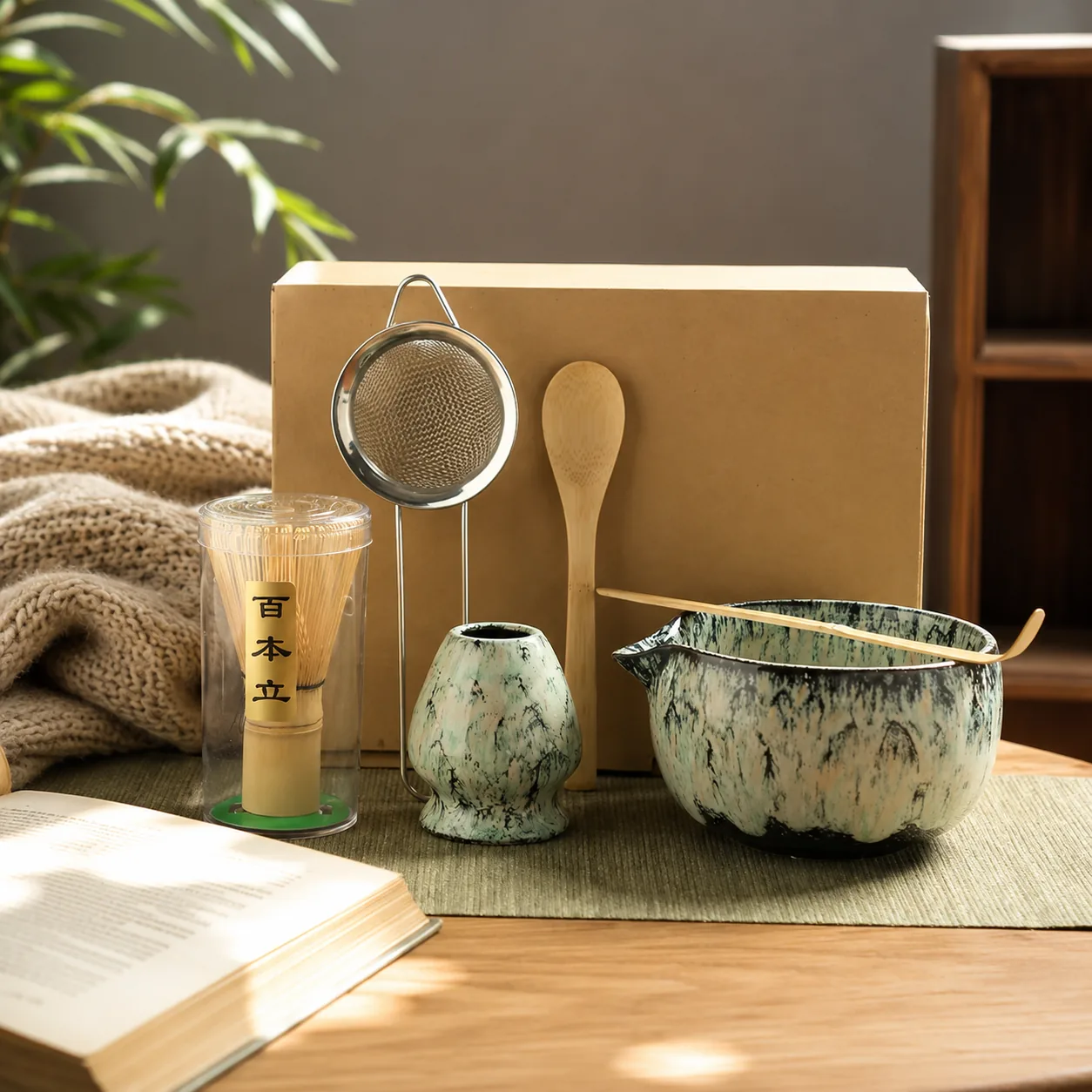
Nobody should buy a chashaku alone as their first purchase; it earns its place as part of a working toolkit. Our complete 6-piece matcha set pairs the chashaku with a 13 cm ceramic bowl with a pouring spout, a bamboo whisk, a matching whisk holder, a stainless steel sieve, and a bamboo teaspoon, which covers every step from tin to foam. If you already own the basics and just need the whisk-drying problem solved, the ceramic whisk holder on our homepage is the single-piece answer. Buyer photos of both live on the reviews page, our protocol is on how we test, and if this is a present, the matcha gift set guide will match the kit to the person.

Naomi Carter · Sourcing & Testing Lead, KujiMatcha
Naomi selects and tests every ceramic piece and whisk KujiMatcha sells on real, daily matcha preparations. She rejects more references than she approves.
You'll pick your color at the secure checkout step.